
Every year, thousands of international students arrive in the United States to pursue higher education.
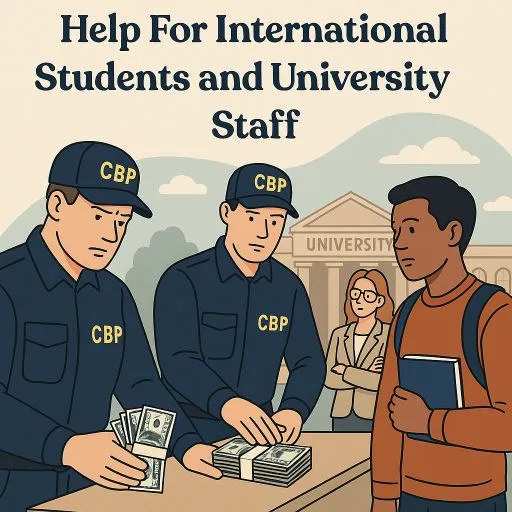
Many bring tuition money in cash, either due to banking limitations in their home countries or because they plan to pay directly at their university’s bursar office. Even when tuition is paid online or through wire transfer, students may still carry significant amounts of money to manage their day-to-day needs like rent, groceries, transportation, but also housing deposits, and other living expenses. Unfortunately, if they fail to report amounts over $10,000, U.S. Customs and Border Protection (CBP) may seize the funds at the border even though the money is for legal purposes.
Who’s at Risk?
Students entering the U.S. on the following visa types are most commonly impacted:
- F-1 Student Visa
- J-1 Exchange Visitor Visa
- M-1 Vocational Student Visa
These students may be unaware that U.S. law requires reporting any cash or monetary instruments over $10,000 when entering or leaving the country. This includes cash, traveler’s checks, and money orders.
Why Students Carry Cash
Even with tuition paid online, students often carry cash for:
- First-month rent or housing deposits
- Furniture and household setup
- Transportation (car purchase, insurance)
- Food and clothing
- Emergency funds
In many cases, students come from countries where international banking is limited or unreliable, making cash the most practical option. In other cases, students may receive last-minute gifts from relatives and loved ones to show their love and help them out financially.
Countries Most Affected
Students from the following countries are frequently impacted due to high enrollment and banking limitations:
- China
- India
- Nigeria
- Vietnam
- Saudi Arabia
- South Korea
These students may be traveling with family members who are unaware of U.S. customs reporting requirements, increasing the risk of seizure.
What Happens When CBP Seizes Student Funds?
If CBP discovers undeclared cash over $10,000, they may:
- Seize the money immediately
- Issue a seizure notice
- Begin forfeiture proceedings
Even if the money is legally earned and intended for education, failure to report it can result in civil penalties and delays in accessing funds.
How Universities Can Help
University offices such as Bursar, Student Affairs and International Student Services can play a vital role in helping students recover seized funds. These offices can:
- Provide documentation showing the funds were intended for education
- Connect students with a customs lawyer and facilitate communiation
- Help students maintain academic status and provide supportive resources while waiting to get their seized money back
Legal Options for Recovering Seized Funds
Students have several legal avenues to recover their money:
- File a petition for remission or mitigation
- Request administrative proceedings
- Submit a claim for judicial forfeiture
It’s critical to act quickly—students typically have 30 days to respond to a seizure notice. An experienced customs attorney can help navigate the process and improve the chances of recovering the funds.