
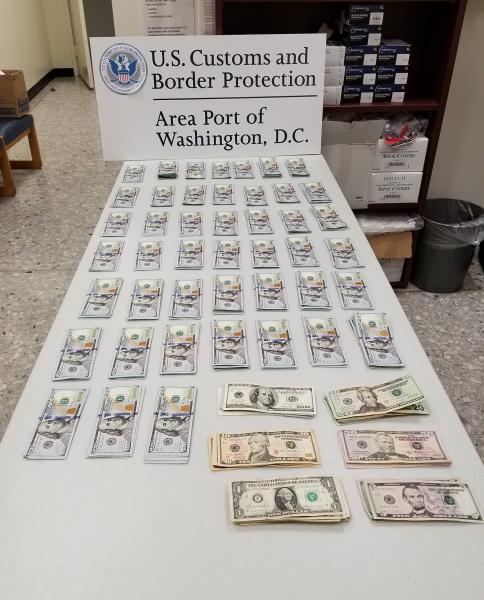
CBP at Washington Dulles International Airport seized $46,628 from a U.S. citizen departing for Cameroon — money that was partially declared but significantly underreported, with the remainder found tucked away in his carry-on bag. Here is the full CBP account:
CBP officers conducted random outbound inspections of passengers boarding a flight to Brussels, Belgium and asked a U.S. citizen how much currency he possessed. The man reported verbally that he had $30,000 and completed a U.S. Treasury Department form. During a subsequent examination of the man’s carry-on bags, CBP officers discovered a total of $46,628 in U.S. dollars. CBP seized the currency and returned $628 to the man as humanitarian relief and released the man to continue his travel. CBP is not releasing the traveler’s name because he was not criminally charged.
He Filed the Form — and Still Lost Everything
This case is worth examining carefully because the traveler did more than most. He was asked about his currency, he answered verbally, and he completed a FinCEN 105 form for $30,000. By most people’s understanding of the reporting requirement, that sounds like compliance. It is not.
The reporting requirement under 31 U.S.C. § 5316 is not satisfied by filing a form — it is satisfied by filing an accurate form for the full amount you are actually carrying. Reporting $30,000 when you are carrying $46,628 is a material underreport. CBP treats the $16,628 discrepancy as an intentional omission, not an oversight, particularly when the unreported portion is found concealed inside a carry-on bag rather than simply overlooked. The form he filed becomes evidence against him, not evidence of compliance — it establishes that he knew the requirement existed and chose to underreport.
The Concealment Element
The $16,628 in additional currency was found “tucked away” inside the carry-on bag during the physical examination — separate from what the traveler presented or acknowledged. That concealment is the bulk cash smuggling element under 31 U.S.C. § 5332. Knowingly concealing currency with intent to evade the reporting requirement is a federal felony, regardless of whether the person is ultimately criminally charged. CBP does not need to pursue criminal charges to allege smuggling in the civil forfeiture proceeding — and the smuggling characterization significantly increases the civil penalty exposure and reduces the mitigation available in the petition process.
As I have noted in other Dulles cases: Dulles releases almost always contain enough facts to allege bulk cash smuggling. The officers are experienced, the inspections are thorough, and the FP&F office is aggressive about pursuing the smuggling characterization when concealment is documented. This case has clear concealment documented on the record before the traveler had any opportunity to explain it away.
The “Random Outbound Inspection” Detail
CBP describes this as a random outbound inspection of passengers boarding a Brussels-bound flight. The traveler was not specifically targeted based on behavior or a prior alert — he was selected as part of a routine enforcement operation. This matters because it underscores how little it takes to end up in secondary examination at Dulles. You do not need to behave suspiciously, attract a K-9 alert, or be flagged by a prior violation. Random selection is genuinely random, and Dulles runs these operations regularly on international departures.
For travelers carrying large amounts of legitimate cash, this is exactly why proactive, accurate reporting before you are ever asked is so important. The traveler in this case was caught not because he was suspected of anything in advance but because he happened to be selected. If he had filed an accurate FinCEN 105 for $46,628 before boarding, CBP would have found the money and let him keep it. The cost of the accurate declaration: zero. The cost of the underreport: $46,000.
Humanitarian Relief — What It Means and What It Doesn’t
CBP returned $628 to the traveler as humanitarian relief — the amount above the round $46,000 figure — so he would have some money for his trip. This is standard practice and does not affect the legal proceedings. The $46,000 is seized and will go through the civil forfeiture process. The traveler will receive a Notice of Seizure and will need to file his election of proceedings within approximately 30 days to pursue return of the funds.
The consequences of a currency seizure extend well beyond the immediate loss of the money. Read our page on the long-term consequences of a cash seizure — or watch the video on the topic — for a full picture of what a seizure can mean for future travel, global entry status, and CBP’s enforcement history on your record.
Has Dulles CBP Seized Your Cash?
If CBP at Dulles seized your cash, contact us before doing anything else — before calling CBP, before writing a letter, and before attempting to file a petition on your own. Dulles FP&F is among the most aggressive offices in the country and unrepresented petitioners consistently get worse outcomes than the facts of their cases warrant. Read our customs money seizure legal guide or watch the video series, and reach out for a free consultation using the contact options on this page.